
The Fast-Moving World of Tech in October 2025
Technology in 2025 isn’t just advancing — it’s accelerating into the small moments of everyday life. From AI-infused computers that summarize meeting notes in seconds to smart rings that quietly track sleep and hydration, innovation is becoming more personal, practical, and sustainable. Over the next few months you’ll see new devices, software, and infrastructure changes that matter whether you’re a consumer, a leader in business, or part of an organization planning for the future.
In this focused roundup you’ll get ten concise, real-world stories and takeaways across four categories — devices, software and models, infrastructure and governance, and sustainability — so you can understand what to try now, what to watch next, and how these technology trends will affect your decisions and daily routines.
Think of this as a quick guide for busy people: one month I tested a voice-first workflow while making breakfast and had my laptop draft an email and pull up a relevant chart — a small shift, but the time saved added up by the week. That’s the practical impact these trends are already having for humans juggling work, family, and side projects.
If you want to stay ahead, save this article and subscribe to EuraDaily Tech — we’ll follow these technology trends across products, data and systems, quantum-inspired innovations, and the policies shaping the year ahead.
1. AI-Powered PCs: The Next Leap in Computing

The biggest wave this fall is the rise of truly intelligent personal computers. Leading manufacturers — Microsoft partners, Lenovo, and Dell among them — are shipping next-generation machines with dedicated AI chips and optimized on-device models that enable real-time translation, offline summarization, and creative assistance without sending every prompt to the cloud.
The Windows 11 (25H2) update brings Copilot+ PC features, turning laptops into active collaborators rather than passive tools: faster context-aware responses, smoother multitasking, and tighter voice integration that feels like talking to a helpful teammate. In practical terms, this means lower latency for heavy tasks, improved battery-conscious performance, and better privacy because more processing happens locally on the system.
Why it matters for work and business: AI PCs change workflows across small teams and enterprises — saving time on routine drafting, speeding data lookups, and surfacing insights from documents. For leaders making infrastructure decisions, adopting these machines can alter toolchains, reduce cloud costs, and require fresh governance around agents and on-device models.
What’s new / Who’s shipping / What you can do today:
– What’s new: dedicated inference chips and optimized local models for common productivity tasks (real time summarization, code completion, voice commands).
– Who’s shipping: a growing set of companies (OEMs and chipmakers) are offering AI-capable products — check manufacturer compatibility lists for specific models and benchmarks.
What you can do: test Copilot+ features on a compatible PC, enable voice integration in daily tools, and review privacy settings to understand how your data and models are handled.
EuraDaily Insight: Analysts estimate the AI PC market could approach $100 billion by 2026 — a figure that underlines both the commercial opportunity and the need for IT readiness. Early adopters report notable productivity gains, but plan for updates to systems, training, and governance to get the full benefit.
2. Wearable Nostalgia: Retro Meets Smart
Fashion and function are shaking hands again — this time with a nostalgic wink. In October 2025, many of the most talked-about wearables channel 2000s-style digital watches and chunkier silhouettes, but beneath those retro shells sit modern health sensors and AI-driven tracking that collect and interpret meaningful data about your body and routines.
Companies from heritage brands to nimble startups — think Oura, Nothing, and Samsung — are exploring a style that feels familiar while packing next-gen capabilities: continuous heart-rate sensing, improved sleep staging, and machine-learning models that turn raw signals into actionable insights.
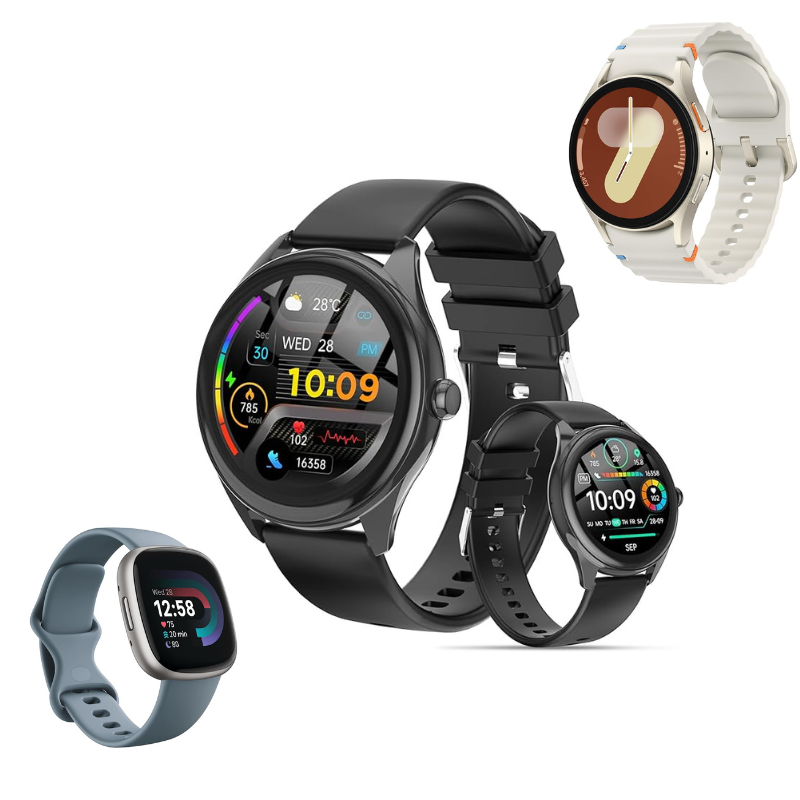
Here’s a quick, human example: I swapped my bulky smartwatch for a retro-style ring hybrid for a week. It felt almost invisible on my hand, yet each morning it surfaced one clear number I could act on — my sleep recovery score — which changed how I scheduled workouts and meetings that week. That small change in how I used a device had real, measurable impact on my day-to-day performance and energy.
Watch vs. ring — quick pros and cons to help you choose:
– Watches: better for on-screen interactions, notifications, and richer apps; slightly larger sensors and batteries improve continuous monitoring.
– Rings: ultra-discreet, more comfortable for sleep tracking, and often more focused on specific biometric signals; limited on-device display and interaction.
If you prefer minimalism, look for products that emphasize battery life and core sensors (heart-rate, SpO2, sleep). If you want in-depth metrics for training or clinical-style tracking, choose devices that expose raw data and support export to third-party tools and learning platforms.
Practical note on privacy and systems: these devices collect sensitive personal data — check vendor privacy pages to understand whether your information is processed locally, stored in the cloud, or shared with partners. That understanding should guide both purchase and use, especially for people using wearables as part of workplace wellness programs or clinical research.
3. Foldable Everything: Beyond Smartphones

Foldable phones were just the opening act. In 2025, laptops, tablets, and even monitors are adopting flexible OLED panels and new hinge designs so devices can change form on the fly — from a compact laptop to a tablet-sized canvas to a large monitor for collaboration.
Manufacturers such as Asus and Samsung (and a growing list of other companies) are shipping prototypes and production models that showcase better materials, lighter frames, and hinges designed for tens of thousands of folds. The result: foldables are moving from premium showcases to genuinely useful products for people who need adaptable workspaces and creative tools.
Practical example: an editor might start the morning editing a long-form piece on a folded, pocketable device, then unfold it into a tablet for proofreading and finally connect it to an external stand-as-monitor for a presentation — one device, three workflows. That flexibility changes how teams think about devices, data access, and collaborative systems.
Quick pros & cons to consider:
– Durability: modern foldables have more robust hinges and protective layers, but repairability can still lag behind traditional clamshell designs.
– Weight & portability: many foldables are lighter than older multi-device setups, yet complexity can add cost and occasional bulk compared with single-purpose tablets or laptops.
– Performance & use: high-end foldables match conventional laptops on many performance benchmarks, but buyers should check thermal performance, battery life, and software optimization — especially for creative tools and multitasking workloads.
– Repairability & lifecycle: flexible displays are improving, but repair costs and parts availability vary; organizations and individuals prioritizing sustainability should evaluate modularity and support policies before purchase.
Who should upgrade now? Creatives, hybrid workers, and leaders who need flexible form factors and are prepared to manage devices across systems will see immediate benefits. Who should wait? Budget buyers and those who prioritize the simplest, most repairable device may want to hold until repairability and service networks catch up.
When shopping, look for clear specs on the flexible OLED panel, hinge rating (fold cycles), software support for multi-mode workflows, and vendor transparency about repairs — these details will tell you whether a foldable is a practical product or just a polished prototype.
4. Smart Rings & Body Data: The Power of Small
The new fitness frontier isn’t on your wrist — it’s on your finger.Smart rings are quietly becoming the go-to device for people who want continuous, unobtrusive biometric monitoring: refined sleep staging, heart-rate variability, and even hydration and stress proxies are now within a slim metal band.
Devices such as the Ultrahuman Ring Air and Oura Gen 4 show that you don’t need a bulky smartwatch to gather useful data. These rings combine tiny sensors with on-device and cloud-based models that translate raw signals into daily insights you can act on — for example, when to prioritize rest, when to push a workout, or when to schedule focused work time.
Personal note: after wearing a ring for several nights I noticed my sleep recovery score nudging me to shift evening workouts earlier — a small habit tweak that improved daytime focus and reduced mid-afternoon crashes. That’s the kind of practical impact these miniature devices can have on humans juggling work and family.
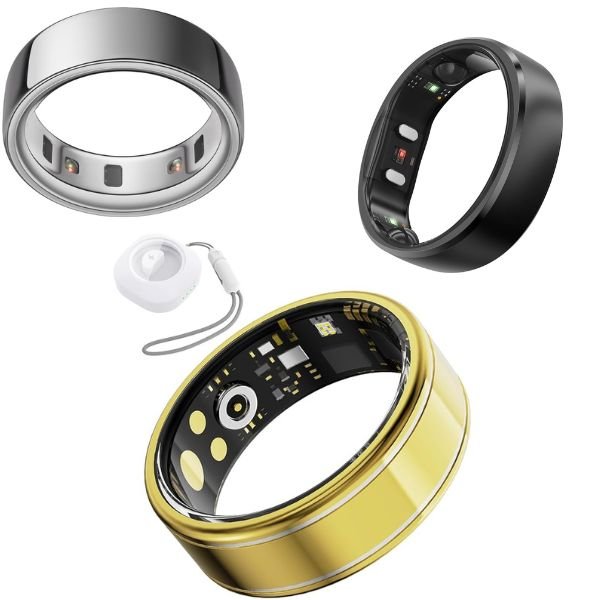
Privacy and data ownership matter: some vendors process most signals locally and sync summaries to the cloud, while others store more detailed metrics on servers for deeper analysis. Before you buy, check whether the vendor allows data export, how long raw metrics are retained, and whether workplace programs will receive aggregated or individual-level data.
Quick tips — what to look for depending on your goals:
– For athletes: prioritize high-resolution heart-rate and HRV sampling, exportable data, and integration with training tools.
– For sleep and recovery: pick rings with validated sleep staging algorithms and strong overnight battery life.
– For everyday wellness and minimalism: choose rings with long battery life, discreet design, and simple daily scores that make it easy to change behavior.
If you want to dig deeper on privacy and device data flows, check our privacy primer (link) to understand how different systems treat biometric information and what questions to ask your employer or vendor before sharing data as part of a wellness program.
5. Voice-First Interfaces: Talk to Your Tech

Typing isn’t going away, but voice is moving from convenience to default. Across platforms, voice-driven computing is getting smarter, more responsive, and better integrated into daily workflows. Microsoft’s Copilot Voice, Apple’s Siri 2.0, and Google Assistant Gemini are examples of systems that aim to deliver hands-free control for everything from quick searches to multi-step tasks.
Imagine this real-world scene: you’re stirring dinner and need a chart from yesterday’s report — a quick voice prompt brings up the file, summarizes the key point, and emails a one-paragraph brief to your teammate, all without touching the keyboard. That frictionless interaction saves time and keeps you focused on the task at hand, whether you’re cooking, commuting, or juggling childcare while working.
Why it matters for accessibility and work: voice-first systems level the playing field for people with mobility or vision limitations and improve multitasking for everyone. They become productivity tools for workers — not just assistants by enabling faster real-time actions and reducing context switches between apps.
Privacy and governance are central considerations: voice data may be processed locally on-device or routed to cloud systems for better models. Check your settings to control what’s uploaded, how long recordings are retained, and whether transcripts are storedOrganizations adopting voice tools should update governance policies to address consent, data minimization, and secure handling of sensitive information.
How to get started — a quick checklist:
Enable voice features in your system settings and in key productivity tools; test local vs cloud processing modes.
Train the system (voice profiles) and keep microphones cleanfor better recognition; use headset mics for noisy environments.
Review privacy controls: disable cloud uploads if you need stronger data protection, and check transcription retention settings.
For teams: create simple governance rules about what commands are allowed, how sensitive data is handled, and who audits usage — a small governance step now avoids big compliance headaches later.
EuraDaily Tip: Try voice for a single daily task this week (drafting emails, calendar management, or short summaries). It’s the easiest way to build readiness and understand how these technology trends reshape tools and systems you use every day.
6. Green Tech: Sustainability Becomes the Standard
Eco-friendly tech has moved from marketing copy to baseline expectation. In 2025, manufacturers are routinely using recycled materials, specifying energy budgets for devices, and designing energy-efficient chipsets so products cost less to run and leave a smaller footprint on the planet.
Companies such as Apple, Fairphone, and Framework are notable for pushing modularity and repairability into mainstream product lines. Those moves reduce waste and extend device lifecycles — a practical example of how technology trends translate into lower total ownership costs and less e-waste for consumers and organizations alike.
Why this matters for infrastructure and systems: data centers and supply chains are big parts of the tech carbon picture. Expect growing investments in green data centers and regional manufacturing that lower transport emissions and improve resilience. For businesses, these shifts affect procurement decisions, vendor selection, and governance frameworks for sustainability reporting.
Quick consumer checklist — what to look for when buying greener devices:
– Materials & certifications: recycled content percentages, EPEAT or similar ratings, and manufacturer sustainability reports.
– Repairability: does the vendor publish repair manuals, offer replacement parts, and provide reasonable repair pricing?
– Energy efficiency: chipset TDP, measured battery life in real-world tests, and whether the device supports low-power modes for extended use.
– Data center & supply chain: for companies buying at scale, ask vendors about their data-center energy mix, local manufacturing plans, and policies on supplier emissions — these infrastructure choices materially affect overall impact.
Policy and governance are catching up: expect more regulation around product labeling and corporate reporting, and watch for “eco-score” style labels to appear on major devices if regulators and standards bodies move forward. These scores will make it easier to compare devices on lifecycle impact instead of just specs and performance.
Practical tip: before your next purchase, check repairability scores and the vendor’s published sustainability roadmap — small choices (a replaceable battery, an extended update policy) add up to big reductions in energy use and waste over the life of a device.
7. Quantum-Inspired Processing for Everyday Devices
Full-scale quantum computing hardware remains a work-in-progress, but the ideas behind it are already reshaping classical computing today. “Quantum-inspired” algorithms and specialized processors apply principles from quantum research to accelerate optimization, search, and sampling tasks — delivering real-world gains in everything from logistics to graphics without relying on fragile quantum chips.
Put simply: you’re not running algorithms on a quantum computer, you’re using clever classical systems and models that borrow quantum techniques to solve hard problems faster. That means tangible improvements in performance and efficiency for systems at scale — shorter compute times, smarter automation, and better outcomes for businesses and consumers alike.
Human example: a logistics manager using quantum-inspired solvers can recalculate delivery routes in minutes instead of hours when a major disruption hits, reducing delays and fuel use. For gaming or rendering workloads, similar optimization approaches can improve frame scheduling and resource allocation so players see smoother performance.
How this differs from quantum computing (quick clarity): true quantum hardware exploits superposition and entanglement on quantum bits; it promises a different class of speedups but is not yet broadly deployable. Quantum-inspired solutions, by contrast, run on classical processors or hybrid accelerators and bring many practical benefits right now.
What organizations and developers should watch over the next 12–24 months:
Adoption: pilot quantum-inspired solvers for high-value optimization problems (scheduling, supply chain, portfolio optimization) to test benefits at your scale.
Tooling & models: evaluate vendor claims, benchmark performance on representative datasets, and ask whether solutions integrate with your existing systems and data pipelines.
Readiness: ensure teams understand the difference between quantum hardware and quantum-inspired methods so procurement and leaders can make informed decisions on infrastructure and investment.
Further reading: look for recent white papers from leading research groups and vendors that compare quantum-inspired approaches to classical algorithms on real-world use cases — these sources help separate marketing from measurable performance gains.
8. Augmented Reality (AR) for Everyday Life
AR is shedding its gamer-only label and stepping into everyday routines. Consumer wearables like the Meta Ray‑Ban 2 and iterations of Apple’s Vision line (lighter, more affordable models have been discussed in 2025) make it possible to layer navigation prompts, live translation captions, and hands‑free video calls over the real world — and that changes how we move, shop, and communicate.
Practical vignette: imagine a commuter walking a new route to work. Their AR glasses display turn-by-turn directions, surface real-time transit delays, and overlay a pop-up with a cafe’s current menu and allergy info — all without pulling out a phone. Or picture a shopper virtually trying on sunglasses via an AR preview and seeing how frames fit their face in different lighting before they buy.
These experiences rely on device sensors, local and cloud-based models, and fast access to relevant data. For developers and companies building AR services, that means balancing on-device processing for latency-sensitive tasks with cloud models for heavier workloads and personalization.
Buying guidance — what to check before you invest in AR wearables:
-Comfort & battery: prioritize lightweight frames and realistic battery-life claims for your real-time use (commuting vs. all-day work).
Privacy & data handling: ask whether visual data is processed locally or streamed to servers, how long images/transcripts are stored, and whether third parties have access to personal overlays.
Software & content ecosystem: look for apps and vendors that support practical use cases you care about (navigation, translation, shopping previews) and check developer support for new features.
Ethics and social impact: AR raises fresh questions about public consent (recording in public), content moderation (what overlays are shown and by whom), and social norms (how people react to visible vs. subtle AR). Organizations deploying AR should build clear usage policies and consider accessibility so these tools are useful, not intrusive.
Future insight: Projections that one in five smartphone users could own an AR wearable by 2026 reflect rapid interest, but adoption will depend on device comfort, ecosystem quality, and how well companies address privacy and useful, everyday experiences. For now, experiment with AR features on your phone and try a short demo with a wearable before committing — it’s the best way to understand the real-world impact.
9. AI-Generated Creativity Tools Take Over
If you’ve used Canva Magic Studio, Notion AI, or ChatGPT, you know the creative tide has already shifted. In 2025, productivity suites increasingly bake in AI text, image, and video generation, so creators can produce polished assets in minutes instead of hours — a shift that changes how teams plan campaigns, students draft projects, and freelancers price their work.
These tools combine large models with data-driven prompts and integrated editing features to accelerate ideation and production. That means fewer repetitive tasks, faster iteration cycles, and higher throughput for businesses that integrate AI into their content pipelines. For solo creators, it often translates into better efficiency and the ability to offer more services without adding headcount.
Real-world example: a freelance designer I spoke with uses an AI image and video workflow to create initial concepts and storyboards in under an hour; she then spends her time refining the client’s voice and final polish. The end result is faster delivery, higher client satisfaction, and more billable hours focused on strategic work rather than routine production.
Ethics and ownership are front and center. As AI agents generate more content, questions about attribution, licensing, and transparency multiply. Expect policy debates and platform-level rules about how to disclose AI assistance, how models were trained (data provenance), and who owns the final output.
Practical actions — a short checklist for fair and safe use:
Credit and transparency: clearly note when AI was used, especially for published media; use platform disclosure tools or simple bylines like “content generated with assistance from AI.”
– Verify sources and factual claims: AI models can hallucinate — always fact-check names, dates, and assertions before publishing.
Licensing and reuse: understand the license of any generated images, music, or footage before commercial use; prefer tools that offer clear commercial rights and watermarking options if required.
Maintain a human-in-the-loop: use AI to accelerate drafts, but keep final editorial control to ensure brand voice, accuracy, and ethical standards.
Resources: look for style guides and platform policies on AI attribution, and consult Creative Commons and licensing resources when reusing generated assets. As these technology trends mature, expect clearer industry standards and regulations that help balance innovation with transparency and responsible use.
10. The Return of Localized Tech Manufacturing
After a decade of stretched global supply chains and capacity bottlenecks, 2025 is showing a clear trend toward regional manufacturing. Governments and companies across Europe, Asia, and North Africa are investing in local chip assembly lines, component factories, and green data centers so that critical devices and infrastructure are closer to the point of use — reducing lead times, freight risk, and exposure to distant disruptions.
That shift matters not just for nations but for people on the ground. For example, a small electronics subcontractor near a new assembly campus in Morocco reported new hires and contracts with regional suppliers, creating jobs and improving local skills — a concrete sign of the impact regional manufacturing can have at scale.
Policy and incentives are a big part of why localized production is viable again: subsidies for semiconductor fabs, tax breaks for green infrastructure, and procurement rules that favor domestic suppliers are encouraging companies to rethink where they build products. Organizations adopting localized sourcing should expect different cost profiles (higher unit manufacturing costs but lower logistics and inventory risks) and plan for multi-year timelines to scale facilities.
Practical considerations for businesses and procurement teams:
Supply chain resilience: localized manufacturing shortens the supply chain and reduces exposure to cross-border shocks, but it requires new supplier relationships and audits.
– Infrastructure & systems: evaluate local energy sources, green data-center availability, and logistics hubs — these infrastructure choices affect total cost and sustainability outcomes.
– Timing & scale: regional fabs and assembly lines take months to years to ramp; plan multi-stage adoption with pilot runs and contingency arrangements during the transition year.
Governance & compliance: local regulations, content requirements, and certification regimes vary by country; build governance processes to manage vendor compliance and cross-border data flows.
For areas like the MENA region, investments in localized manufacturing and greener data centers offer a two-fold opportunity: boosting local employment and reducing dependence on imported tech products. Companies evaluating a move toward regional supply should run pilot projects to validate cost, quality, and timelines before committing to wide-scale procurement changes.
Bottom line: localized manufacturing is not a quick fix — it’s a strategic shift in how companies and governments structure production and infrastructure. But when done thoughtfully, it improves resilience, shortens lead times, and can deliver meaningful social and economic benefits at the community level.
Conclusion: The 2025 Tech Revolution Is Personal
October 2025 makes one thing clear: modern technology is less about raw horsepower and more about how it fits into our lives — improving personal connection, sustainability, and smarter daily routines. These technology trends reduce friction, surface useful data, and reshape the systems we depend on, from home devices to corporate infrastructure.
Three practical things to do this month:
– Check privacy and data settings on new devices (voice tools, AR wearables, and smart rings often collect sensitive information).
– Try one new tool that saves time — enable a voice feature, test Copilot+ on a compatible PC, or experiment with an AI creativity workflow — and measure the performance gains in your daily work.
– Prioritize repairability and energy efficiency when shopping: look for modular designs, clear sustainability reporting, and vendors investing in greener infrastructure and local manufacturing where possible.
For leaders and organizations adopting these trends, remember to update governance and procurement policies: clarify who owns data, how on-device models are managed, and how energy and infrastructure choices align with corporate sustainability goals. These governance steps turn exciting capabilities into responsible, scalable solutions.
We want to hear from you. Tell us in the comments which trend affected your life most in the last few months — did a smart ring improve your sleep? Did a foldable change how you work? Local perspectives (especially from areas like MENA) are especially valuable as regional manufacturing and data-center investments shift the economics and opportunities for jobs and innovation.
Stay tuned to EuraDaily Tech for monthly deep dives, product spotlights, and clear guidance that helps you act on these technology trends. Subscribe to our newsletter for curated updates, and follow us on social to join the conversation about readiness, transparency, and real-world impact.
Similar Articles
Autonomous Drones: The Future Soldiers of the U.S. Military?